
Case Study: Cutting Operational Drag by40%
I. The Challenge: The Cost of Process Covariance
The client, a high-growth B2B logistics services firm with an annual revenue of $120
million, was experiencing a critical constraint on its enterprise valuation. Despite a
profitable core business, the firm was suffering from acute systemic entropy—a state
where internal process friction consumed capital and eroded customer lifetime value.
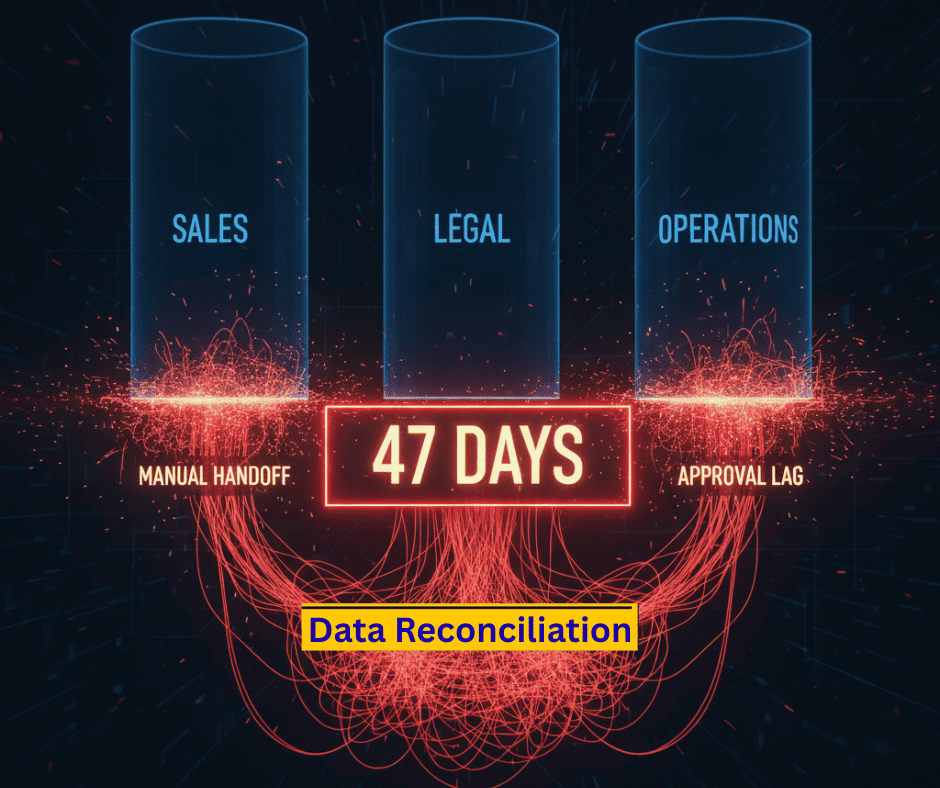
The single most corrosive point of failure was the Sales-to-Fulfillment handoff, which
exhibited a mean time of 47 days from contract signing to initial service delivery. This
extended latency was a direct measure of operational drag, resulting in a high client
churn rate and excessive administrative rework. The underlying issue was a high
degree of process covariance between the Sales, Legal, and Operations silos, where
the variability in one function compounded the stasis in the next, creating a non-linear
financial penalty. The firm was structurally incapable of scaling without a fundamental
architectural intervention to eliminate this systemic friction.
II. The Elevion Intervention: Architecting Systemic Flow
Elevion was engaged to apply the Architecting Operational Alpha Playbook, moving
the client from a state of systemic entropy to one of continuous, self-correcting flow.
The intervention began with a rigorous diagnostic phase utilizing Causal Flow
Mapping to objectively locate the points of maximum Process Covariance. This
analysis revealed that 85% of the 47-day drag was attributable to three unaligned,
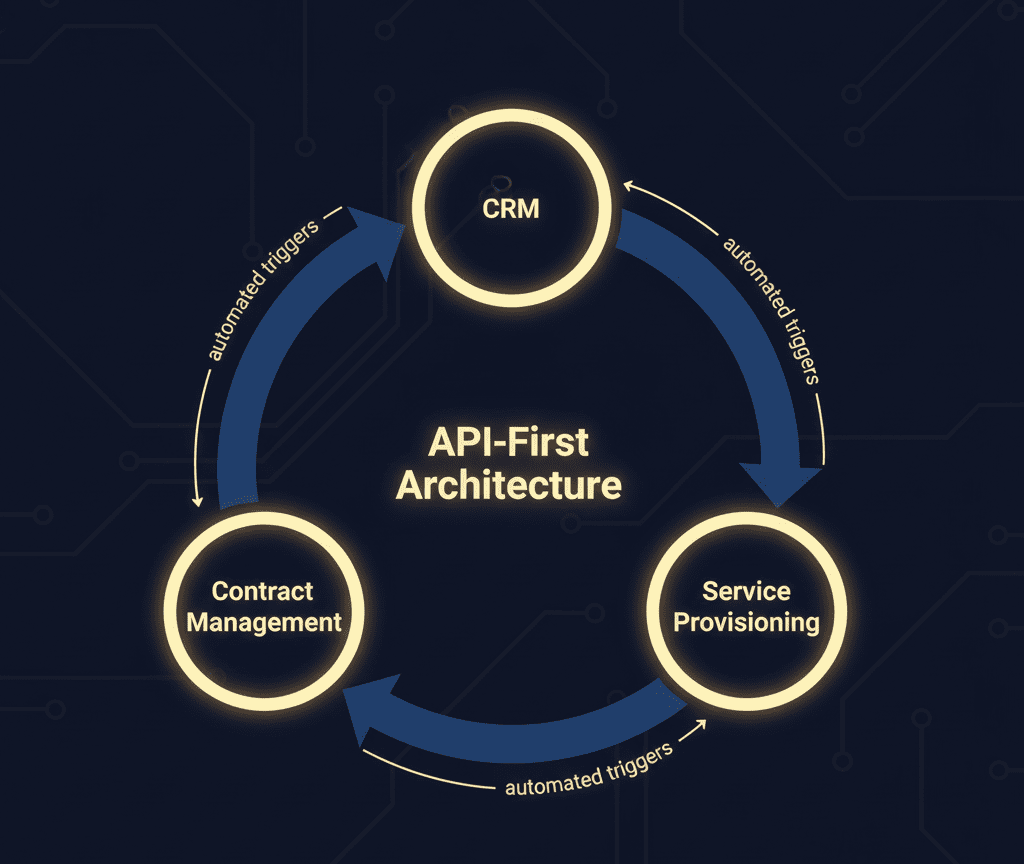
human-in-the-loop handoffs. The solution was the engineering of a Self-Optimizing
Loop that bypassed cognitive waste. This involved integrating the CRM, contract
management, and service provisioning systems via an API-first architecture. The
system was architected to automatically trigger the next operational node upon the
completion of the preceding one, eliminating the need for manual data validation,
email-based approvals, and other sources of Marginal Cost of Stasis.
III. The Quantifiable Result: Financializing Efficiency
The structural re-architecture yielded immediate and profound financial results. The
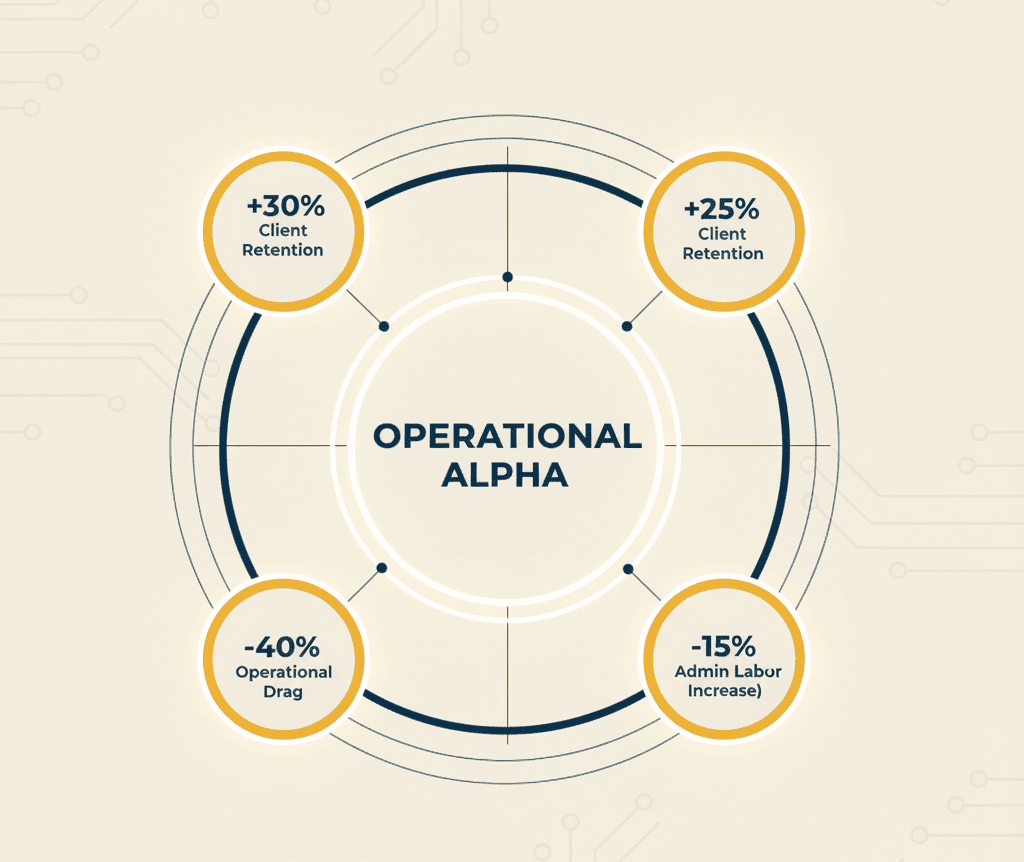
firm achieved a 40% reduction in end-to-end operational drag, collapsing the
average contract-to-delivery time from 47 days to a new mean of 28 days. This
systemic velocity translated directly into a 25% increase in annual customer
retention, as the initial client experience was transformed from a friction-laden
process into a seamless, high-velocity onboarding. Furthermore, the elimination of
manual rework and cognitive waste resulted in a 15% decrease in the labor cost of
administrative rework across the Sales and Operations departments. As a secondary,
but critical, metric, the newly liberated capacity allowed the firm to increase its total
service volume by 30% with zero increase in non-revenue generating headcount,
proving that operational efficiency is the most potent form of capital liberation.
IV. Conclusion: Operational Excellence as a Moat

This case study proves that operational excellence is not a secondary cost-reduction
exercise; it is a structural investment that creates an unreplicable financial moat. By
eliminating systemic entropy and architecting for Operational Alpha, the client
transformed its internal processes from a constraint on growth into a competitive
weapon. The resulting velocity and resilience are advantages that competitors, locked
into legacy, friction-laden processes, cannot replicate. The future of enterprise value is
defined by the velocity of its internal flow.